 Image 1 of 1
American higher education is at a critical juncture. Mounting financial pressures, shifting enrollment, and evolving workforce expectations have pushed the relationship between universities and the people who run them to a breaking point. From the Ivy League to regional public colleges, faculty and staff are organizing at a pace not seen in decades.
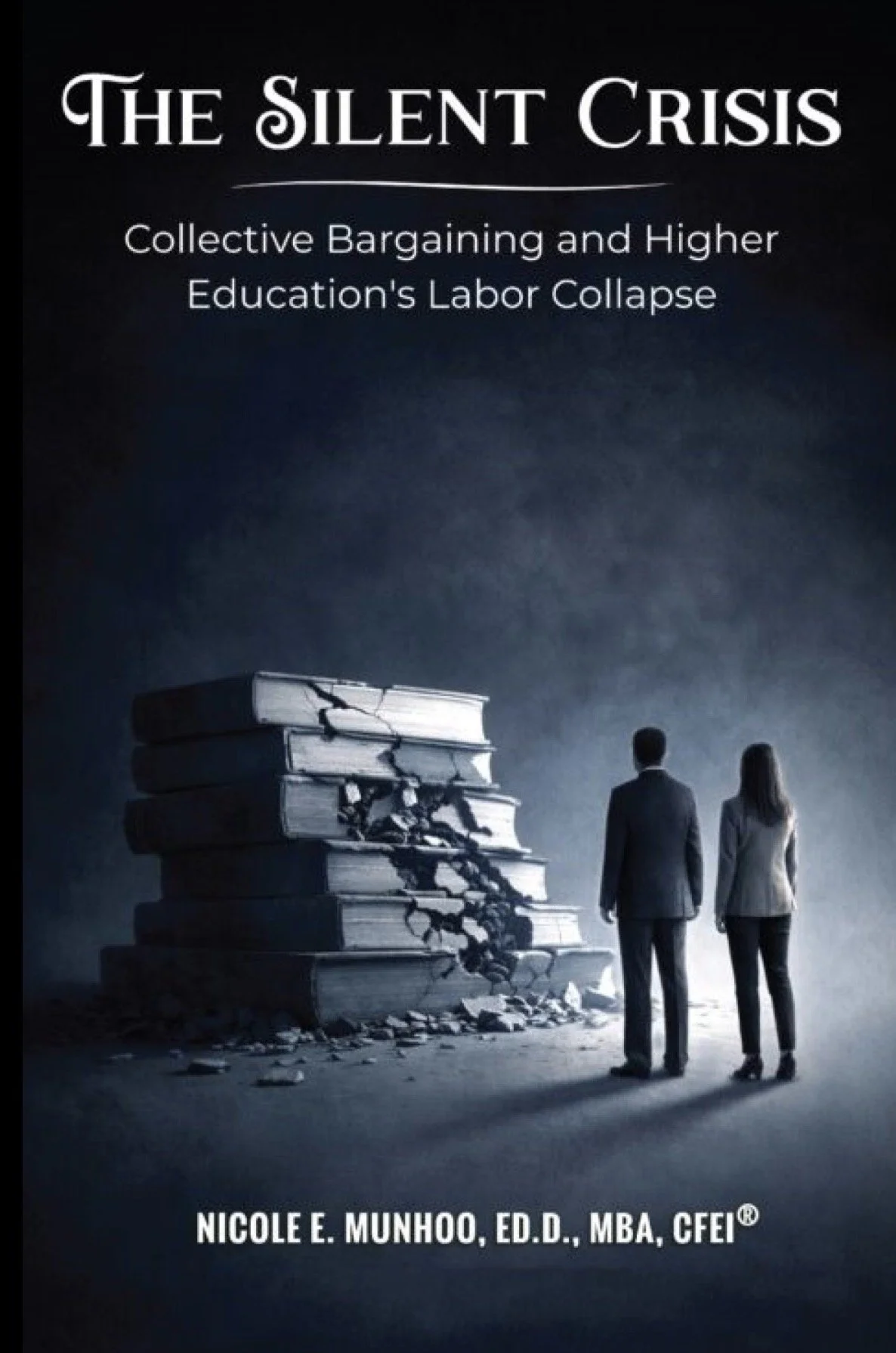
Silent Crisis: Collective Bargaining and Labor Relations in Higher Education traces this movement from its legal roots in the 1935 Wagner Act through today’s landmark campaigns at institutions like Columbia, Harvard, Tufts, and Boston University. Dr. Nicole Munhoo examines how the rise of contingent faculty, the decline of tenure, and the corporatization of university management have transformed academic work, and why collective bargaining has become one of the most powerful tools workers have to push back.
Combining legal research, historical analysis, and real-world case studies, this book speaks to anyone with a stake in the future of higher education: faculty considering organizing, administrators navigating labor relations, policymakers shaping the rules, and anyone who cares about the people who keep our universities running.
American higher education is at a critical juncture. Mounting financial pressures, shifting enrollment, and evolving workforce expectations have pushed the relationship between universities and the people who run them to a breaking point. From the Ivy League to regional public colleges, faculty and staff are organizing at a pace not seen in decades.
Silent Crisis: Collective Bargaining and Labor Relations in Higher Education traces this movement from its legal roots in the 1935 Wagner Act through today’s landmark campaigns at institutions like Columbia, Harvard, Tufts, and Boston University. Dr. Nicole Munhoo examines how the rise of contingent faculty, the decline of tenure, and the corporatization of university management have transformed academic work, and why collective bargaining has become one of the most powerful tools workers have to push back.
Combining legal research, historical analysis, and real-world case studies, this book speaks to anyone with a stake in the future of higher education: faculty considering organizing, administrators navigating labor relations, policymakers shaping the rules, and anyone who cares about the people who keep our universities running.